Japan at Year-End: Autumn Colors, Lights, and Quiet Roads
From late November to mid-December, Japan showcases the last maple forests and the first urban light festivals. Enjoy quieter roads, available ryokan, and the crab season on the coast. A guide for those looking to explore the country with a rental car during this time.
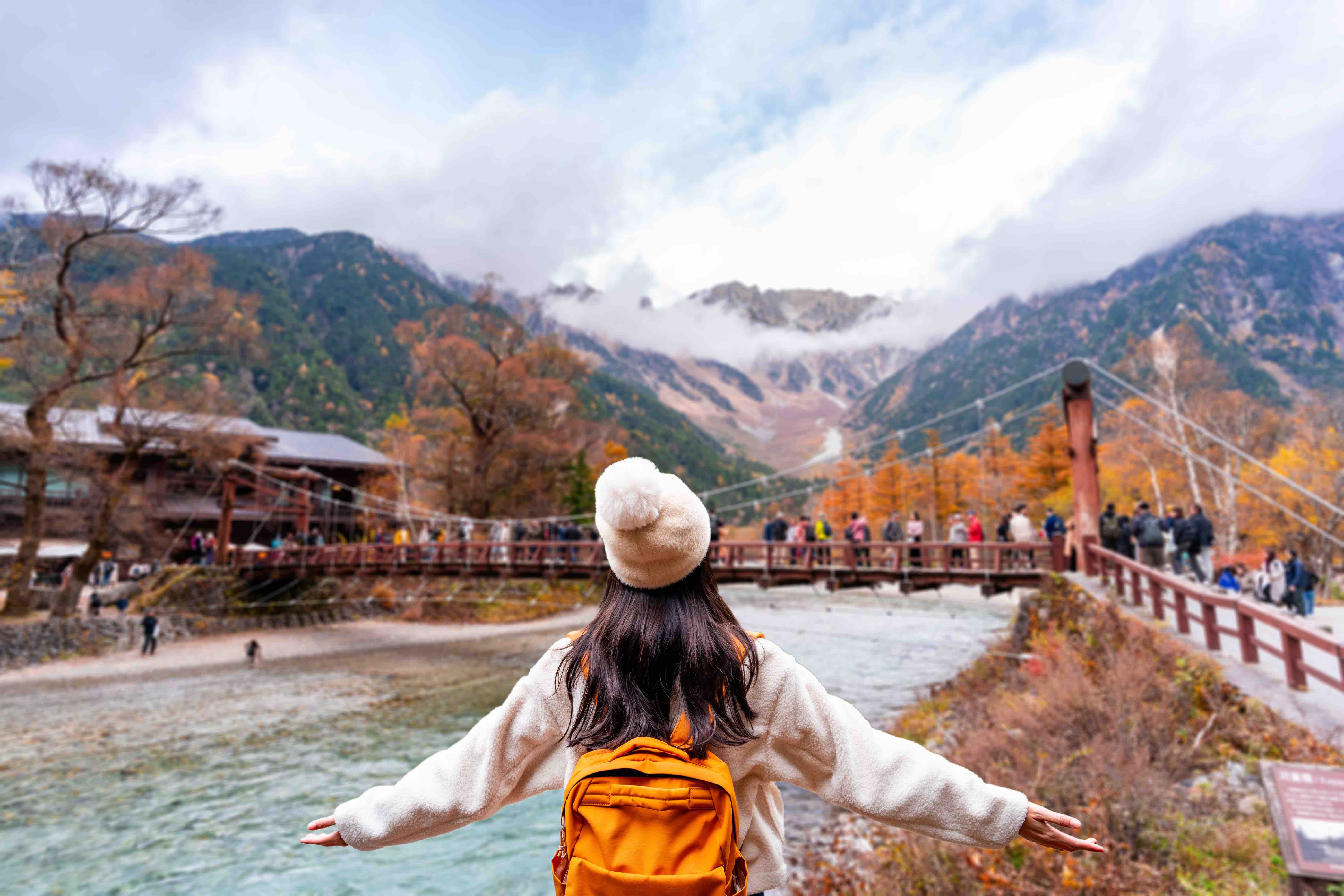
Japan at the End of the Year: Autumn Colors, Illuminations, and Deserted Country Roads
Associating Japan only with cherry blossoms or the golden October means missing out on a season that has much to offer. Between the last week of November and mid-December, two atmospheres overlap: the maples still shine in the valleys and temple gardens on the plains, while the cities have already turned on their winter illuminations. Hotels have rooms available again, restaurants have tables, and on country roads, you often drive for minutes without encountering anyone. This guide shows you how to best enjoy these weeks with a rental car.
Why These Weeks?
Classic travel periods come at a price. In April and mid-November, famous spots are overcrowded, ryokan are booked months in advance, and flights are expensive. As soon as the big rush for the leaves is over, the situation changes. Nature still offers colors, the cities already offer festivities, and the crowds decrease significantly.
Add to that the climate. On the Pacific coast, that is in Tokyo, Nagoya, Osaka, Hiroshima, and Kyushu, December is generally dry and clear. The air is cold, but the sun shines, and Mount Fuji is often visible to the top. For photographers, this is the best time of the year.
And finally, the car. At the end of autumn, the back roads are practically all yours. Set off early for a valley where the leaves are still hanging, have lunch at a rest area with regional cuisine, change your route if clouds appear, and extend your stay with a night where you like. Just include in your plans the short days and the first snow.
Who is it for? For couples and families who prefer to travel slowly, for returning visitors who have already seen Kyoto in the crowd, and for anyone who loves light festivals and hot springs.
Where the Leaves Still Shine in December
The change of leaf color, in Japanese koyo, starts in September in the mountains of Hokkaido and takes about three months to reach the coastal plains in the south. Those arriving in late November or early December will not find the colors in the Alps, but in the gardens and hills around the big cities.
For 2026, Japanese meteorological services predict a late season, as November remains mild. Indicatively for the maples:
| Region | Predicted Maple Peak 2026 | Ginkgo (yellow) |
|---|---|---|
| Tokyo | last week of November | around November 26 |
| Hiroshima | last week of November | end of November |
| Osaka | first week of December | around November 24 |
| Fukuoka | first week of December | early December |
| Kyoto | second week of December | end of November |
The ginkgo trees change color a few days before the maples and form golden avenues in the cities, for example, in the outer garden of the Meiji Shrine in Tokyo or along Midosuji in Osaka. The red maples, on the other hand, are found in temple complexes, castle parks, and along rivers. Both can be combined in a day: in the morning an avenue, in the afternoon a temple.
Nighttime Illumination in Temples
Many temples and gardens open during the leaf season after sunset and illuminate their trees. The reflection in the pond is often more spectacular than the daytime visit. Admission is generally charged, and there are queues on weekends. Come on weekdays and directly at the evening opening, and you'll have almost the first quarter of an hour to yourself.
Practical tip: Leaf color change forecasts are updated weekly. Plan your main temple visits only a few days in advance. Two valleys twenty kilometers apart can have a week's difference.
Quieter Roads, Available Rooms
Autumn tourism focuses on certain places and certain weekends. Once it ends, one of the most relaxing travel periods of the year begins, until the country gets moving at the end of December for the New Year.
You notice it everywhere: there's no line for the museum, you find a table at the restaurant the same day, a seat on the train, and in small towns, shopkeepers have time for a chat. A day out in December thus consists of one or two main goals, a long lunch, a walk under the low light, and an evening in the city or a hot bath.
With the car, you gain even more flexibility:
- Visit famous places on a weekday directly at opening.
- Reserve weekends for remote areas or a day at the onsen.
- Leave half a day free every few days to enjoy the good weather or a casual discovery.
Three exceptions to know: the holiday weekend from November 21 to 23, 2026, when leaf spots are besieged; Kyoto, which remains full until the end of November; and the days around New Year's from December 29 to January 3 with closures and travel routes.
How Much It Costs
The end of the year is not a time for bargains, but between late November and December 20, the value for money is generally better than in spring. Demand decreases after the leaf peak, hotels lower their prices on weekdays, and even ryokan with dinner have space again. From Christmas, prices rise significantly.
Where to save:
- Accommodation: Weekday prices are often significantly lower than on weekends in tourist regions.
- Rental car: Book in advance to ensure the desired model; check if winter tires are included or at extra cost.
- Food: Lunch menus allow you to eat in very good restaurants at a fraction of the evening price.
- Light festivals: In city centers, most are free, as are Christmas markets.
- Flights: Departing in the first half of December is much cheaper than during holiday periods.
Christmas in Japan
Christmas in Japan is not a national holiday, nor a religious or family celebration. It's a festival of lights and outings. From early November, department stores, stations, and office towers are decorated, and the city remains festive until December 25. On the 26th, everything is dismantled, and decorations for the New Year are installed.
Some peculiarities that surprise visitors: the typical Christmas cake is a strawberry cream cake, ordered a few days in advance. Roast chicken is considered a festive meal and sells out on Christmas Eve. And December 24 is mainly an evening for couples, similar to Valentine's Day.
Christmas Markets
German Christmas markets have become a phenomenon in Japan. Mulled wine, sausages, gingerbread, and wooden chalets can be found in almost all major cities, often under the patronage of German partner cities. Some dates for 2026:
| City | Market | Period |
|---|---|---|
| Tokyo | Shin-Toyosu and Shiba Park | from November 20 and December 4, respectively, until December 25 |
| Tokyo | Roppongi Hills and Azabudai Hills | November 21 until December 25 |
| Yokohama | Red Brick Warehouse in the port | November 20 until December 25 |
| Osaka | Umeda Sky Building and Tennoji Park | from November 13 and 20 until December 25 |
| Sapporo | Odori Park, partner market with Munich | November 20 until December 25 |
Light Festivals Outside the City
The grand Illuminations are often found on the outskirts or in the countryside, where millions of LED lights transform entire parks. Here, a car is very useful:
- Ashikaga Flower Park (Tochigi Prefecture, just over two hours north of Tokyo): over five million lights, Christmas program from late November to late December, closed on December 31.
- Nabana no Sato (Kuwana, Mie Prefecture, between Nagoya and Ise): light tunnels and water light show, ten minutes from the Nagashima highway exit, large free parking.
- Sapporo White Illumination: lights in the snow at Odori Park, until December 25.
- Urban Centers: Marunouchi and Roppongi in Tokyo, Midosuji in Osaka, walkable and free.
The sun sets early in December, around 4:30 PM in Tokyo. Make sure to be on site in time to witness the lighting moment, and then dine nearby instead of rushing with everyone to the parking lot.
December is also the season of Bonenkai, year-end parties among colleagues. Bar districts are crowded and noisy on Friday nights; if you want a specific restaurant, make a reservation.
Crabs, Oysters, and Hot Springs
With the end of autumn comes winter cuisine, a cuisine that Japanese people look forward to all year:
- Snow Crab: fishing begins in November along the Sea of Japan coast. Fukui, Hyogo, and Tottori prefectures are the destinations, and a crab meal at a ryokan is a good reason to detour along this coast.
- Oysters: Hiroshima and Miyajima Island, grilled at the kiosk or breaded.
- Nabe: stews simmering in the center of the table, ideal after a cold day.
- Yaki-imo: roasted sweet potatoes, sold from a truck with a loudspeaker or at the supermarket.
- Mikan and Kaki: mandarins and persimmons, now at their peak.
And then the bath. An onsen in December, preferably an outdoor bath with a view of colorful trees or the first snow, is for many travelers the strongest memory of the entire trip. Hakone, Kusatsu, Arima, Kinosaki, or Beppu are ideal for a one or two-night stay. Those traveling by car arrive in the afternoon, bathe before dinner, and leave the next morning refreshed. Important: inform the ryokan of your arrival time, as dinner has a fixed schedule.
Three Year-End Itineraries
| Itinerary | Best Period | Why by Car |
|---|---|---|
| Izu Peninsula and Hakone: coastal roads, onsen villages, view of Mount Fuji from the western shore, wasabi fields | December | The peninsula is hard to reach by train; with a car, you can combine coast, mountain passes, and baths in one day |
| North Kyushu: Fukuoka, Yufuin, Beppu, Kumamoto, and the volcanic landscape of Aso | Late November to mid-December | Leaf fall, mild temperatures, dense network of onsens, and deserted roads in the high mountains |
| San'in Coast: Tottori, Kinosaki, Matsue on the Sea of Japan | November to early December | Crab season, fishing villages, and onsen towns, reachable by train only with transfers |
A tried-and-true combination: first the big city by train, then take the car on the day of departure. This way, you save on high parking costs in the center and enjoy the road to the countryside. Those traveling in mid-December can also reverse the order and add two days of light festivals in the city after returning the car.
Driving at the Start of Winter: What Changes
On the main roads along the Pacific coast, driving in December is similar to October. However, four points deserve your attention:
| Topic | What to Expect | What You Should Do |
|---|---|---|
| Short Days | Dark from 4:30 PM, unlit country roads | Plan stops to arrive during daylight |
| Snow and Ice | Hokkaido, Tohoku, Sea of Japan, and all altitudes | Request winter tires when booking; avoid mountain passes in case of warnings |
| Closed Roads | Many scenic roads close for winter | Check before departure, prepare an alternative through the plains |
| Residential Roads | Narrow alleys without a center line, pedestrians, bicycles | From September 2026, speed is limited to 30 km/h |
Winter tires in Japan are called studless. In Hokkaido, they are included in the rental price; on Honshu and Kyushu, they are an option with limited availability. If your itinerary exceeds 500 meters in altitude or follows the western coast, indicate it when booking, not at the counter.
Around the turn of the year, it is also advisable to avoid long trips on December 29 and 30 and January 2 and 3. Highways around major cities are then blocked for hours.
Driver's License: Clarify for Booking
German drivers need three documents in Japan: a valid original driver's license, a passport, and an official Japanese translation of the license. The German international driver's license is not recognized, as Japan only accepts the 1949 Geneva Convention format. If the translation is missing, the rental company will refuse to hand over the car, and the booking is lost. The translation is provided by JAF and is valid for one year from entry into Japan; arrange this before paying for flights and ryokan.
Dates You Should Know
| Period | Event | Travel Consequences |
|---|---|---|
| Early November | Christmas lights on, start of crab season | Festive cities, best time for the west coast |
| Mid-November | Peak foliage in mid-altitude mountains | Crowded weekends at famous spots |
| November 20-25 | Most Christmas markets open | Evening schedule in cities guaranteed |
| November 21-23 | Holiday weekend (Labor Thanksgiving Day) | Crowded roads and destinations, book in advance |
| Late November to December 20 | Foliage in the plains, quiet weeks | Best time for colors and tranquility |
| December 24-25 | Christmas, not a holiday | Restaurants full on the evening of the 24th, illuminations at their peak |
| December 29 to January 3 | New Year holidays | Museums and shops closed, highways crowded, high prices |
Those who experience the New Year days discover a different Japan: the first shrine visit of the year, pine decorations at doors, and unusually quiet cities. However, meals and visits need to be planned.
Departure Checklist
- Regions chosen according to current foliage forecasts
- Avoided the weekend of November 21-23 at famous spots
- Noted the dates of Christmas markets and light festivals
- Stops short enough to arrive before dark
- Requested winter tires if the north, mountains, or west coast are on the route
- Checked mountain road openings
- Booked at least one night in a ryokan with onsen
- Packed warm layered clothing and a raincoat
- Considered closures around New Year if the trip lasts until late December
- Passport, original license, and Japanese translation ready
Foliage forecasts, event dates, and road closures change during the season. Check official information for each day of driving and visits. Status: November 2026.
Frequently asked questions
Is Japan still worth visiting in December for autumn leaves?
Yes, as long as you stay in the lowlands. The colors move from north to south and from mountains to valleys; in Tokyo, Osaka, Kyoto, and Fukuoka, the peak is expected between late November and the second week of December according to weather services.
When is the quietest period?
The days after the holiday weekend around November 23 until about December 20. Before that, tourists crowd the famous leaf-viewing sites, then the New Year traffic begins.
Is Christmas a holiday in Japan?
No. Shops, museums, and restaurants are usually open on December 24 and 25. It's celebrated with lights, cakes, and dinners, not with family; the family celebration is on New Year's.
Do I need winter tires for a rental car in December?
North of Tokyo, on the Sea of Japan coast, and on all mountain roads, yes. In Hokkaido, they are standard; elsewhere, they should be requested when booking. Along the Pacific coast to Kyushu, lowland roads are generally clear.
What documents does a German driver need to rent a car?
A valid original driver's license, passport, and an official Japanese translation of the license, as the German international license is not valid in Japan. All three documents must be in paper form.
When should I avoid planning long trips in December?
Between December 29 and January 3. During this time, half of Japan travels to visit family, highways are crowded, and many businesses are closed.